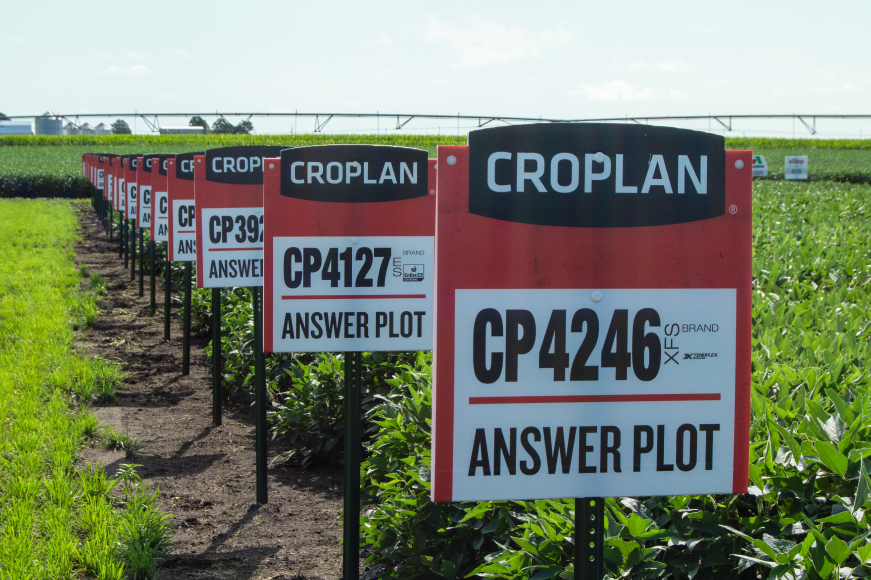


2026 DFC Seed Research From the Answer Plot® Innovation Farm
Ryan Moeller
U.S. Product Manager, Sunflower, Wheat and Field Peas
-

- Agronomy
- 2026 DFC Seed Research From the Answer Plot® Innovation Farm
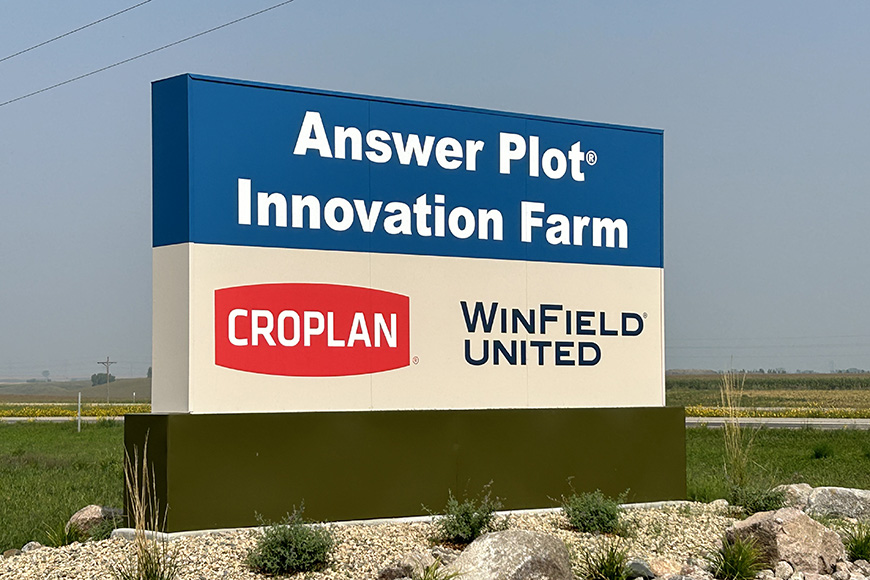
We asked DFC team members to summarize areas of interest for each of their respective crops. Read on to learn about some of the new CROPLAN hybrids and varieties coming down the pipeline and the research behind them.
Wheat, Sunflowers and Peas
Ryan Moeller, WinField United U.S. Product Manager; Sunflower, Wheat and Field PeasAs our response trials have demonstrated over several years, each wheat variety responds differently to population, fertility levels and fungicide treatments. Our CROPLAN hard red spring wheat varieties have a strong track record when it comes to yield. But with producers focusing more on improving protein levels, we wanted to get a better understanding of how different management levels can impact protein content as well.
This spring, we expanded our wheat research by planting a brand new, total package management trial. The goal was to see how our three different CROPLAN hard red spring wheat varieties responded to both high and standard management practices in terms of both protein and yield. Each of these varieties was planted at different populations, exposed to different nitrogen and micronutrient applications, and treated with fungicides at different intervals. At over 2 acres in size, this substantial study was one of the larger research blocks at the Answer Plot Innovation Farm this year.
Now that we’re four years in, the sunflower advancement program at the Innovation Farm is running like a well-oiled combine. We have a strong portfolio of CROPLAN sunflower products to show for it, but there’s always room for improvement. This year, we continued to focus on developing new hybrids that can help plug the smallest of holes in our lineup, such as an early ExpressSun® product with high oil content. As past experience has taught us, there’s also a possibility of discovering a new hybrid with qualities that we weren’t even looking for.
As usual, we dedicated several sunflower research plots to response-to nitrogen (RTN), response-to population (RTP) and seed treatment trials in 2026. This included our new, highly anticipated premium Spryzo™ SF seed treatment technology, with components from the top proven sunflower seed treatment products we’ve offered in the past, plus additional cutworm control.
We also continue to accelerate research and development of the new A.I.R.™ technology trait, which is still moving through registration and testing in the United States. A.I.R. sunflowers have natural tolerance to both active ingredients of products like Beyond® and Express® herbicides, providing farmers with a new level of flexibility, improved weed control and another way to manage herbicide resistance.
In chickpea news, we’re excited to be researching our first product: CP Emersyn. It showed well at the DFC Field Day this summer, and we continue to build seed volume in Idaho. Remember: Chickpea seed production requires patience, as they develop pods slowly, are prone to abort pods when temperatures fluctuate and only contain about two nickel-sized seeds per pod as it is.
Canola
Mick Miller, WinField United U.S. Product Manager; CROPLAN Canola, Alfalfa, Forage and Oilseed Specialist
This year we expanded performance testing in our canola trials, increasing to 56 different canola varieties up from 48, including commercial and experimental CROPLAN hybrids and many competitive checks. In addition to performing standard yield trials, we also replicated all these plots so we could carry out shatter trials.Our response trials continued to be an important focus of canola research in 2026, as the findings directly influence which products farmers select for their individual fields — especially when input costs are elevated. For example, the cost of fertilizer was extremely high this spring, so we had many farmers requesting recommendations for hybrids that have low RTN scores. As a result, CP7500LL canola was popular this season, as producers wanted to plant the right product in fields where they could hold back on fertility and still achieve desirable yields.
Continuing our RTN and RTP research is imperative, especially as we investigate the potential of our most promising experimental varieties and determine whether they’re worthy of being added to the CROPLAN canola lineup.
We also studied how canola responded to different seed treatment packages that included products like insecticides, fungicides and biologicals. Our new Spryzo™ WCA seed treatment performed exceptionally well in winter canola, and we’re testing a similar product for spring canola. Foliar trials applied at different crop stages helped us gauge how micronutrients, macronutrients and fungicides impacted canola yield potential and overall plant health.
Crop Protection
Ryan Peterson, WinField United Crop Protection Manager
As Ryan and Mick already discussed, our Spryzo seed treatment trials were a highlight of this year’s crop protection research. We also dedicated a fair amount of time to focusing on how MAX-IN® plant micronutrient applications can impact yield potential and overall plant health. Our portfolio consists of more than a dozen MAX-IN products, and many of them were tested this year.
And as Mick mentioned in his summary, we’ve also tested several biologicals on canola and other DFCs at the Innovation Farm. Biologicals and biostimulants are often used interchangeably to describe products containing microbes, plant extracts, beneficial insects or other naturally occurring materials. Manufacturers often claim they can help enhance crop health, improve nutrient efficiency and protect plants from stress and pests.
We set up 400 to 600 plots at the Innovation Farm every year, and about a third of them have been dedicated to vetting different biologicals. We often select these products for testing based on trends and observations received from the field. For example, we heard from growers last year who applied a humic acid product on canola and were pleased with the results. We wanted to try to put some numbers behind it, so that’s one of the products we looked at this season.
While our biological tests are showing promise, we need to continue collecting more data points to be able to share meaningful results. This takes time, and our team is working to gather the quality replicated trial data we need to confidently recommend new biological products.
Forages
Jeff Jackson, CROPLAN Forage Specialist & Sorghum Product Lead
At the DFC Field Day this summer, my discussion centered on the benefits of implementing the Forage 365 model — the practice of growing CROPLAN forage crops year-round. By rotating from alfalfa to other forage crops like corn silage, sorghum and triticale, producers can essentially eliminate the off-season and potentially produce an extra 10 tons of forage or more for their livestock every year.*
Alfalfa, of course, is the perennial piece of the equation, offering multiple years of forage production with less input cost for seeding, and increased soil organic carbon sequestration compared to continuous annual crops.
In the past couple of years, we took the time to investigate and understand why there was an uptick in early disease pressure in alfalfa stands. The culprit was that some fungicides used in alfalfa production were becoming less effective. To help improve stand establishment, we introduced GroZone® Force seed treatment, which consists of two fungicide modes of action to help support better early season protection against diseases like pythium, phytophthora root rot and Aphanomyces root rot.
Now we’re in the process of adding two new fall -dormancy (FD) 4 alfalfa products to the CROPLAN lineup — GalvaTron AA HarvXtra® Alfalfa with Roundup Ready® Technology and Rebound MAAX conventional alfalfa. These new genetics have exceptional protection against Aphanomyces and anthracnose, which helps provide uniform emergence, enhanced root development and improved stress tolerance.
We’ve also added corn silage into our fold, and we’re looking to help develop more livestock-friendly hybrids with improved digestibility in the process. And finally, we have several stress-tolerant sorghum silage products in our lineup that have excellent water-use efficiency, and a host of promising triticale products coming down the pipeline. The CROPLAN forage portfolio is well positioned to meet your forage needs now and will continue to build upon the success we've seen.
Most of the research trials we carry out at the Innovation Farm are based on real on-farm problems that we’re trying to solve — problems that we hear about from growers just like you. So, if you’re dealing with a challenge in your fields, or you’ve tried a new product or crop management practice that yielded positive results, don’t hesitate to share it with your CROPLAN local retail seed expert. Who knows? You might see a plot dedicated to it at next year’s Answer Plot Innovation Farm.
*Fall-seeded triticale crops harvested at two Answer Plot® locations in spring 2025 provided average yields of 24.6 tons (Garden City, KS) and 17.1 tons (Nampa, ID).
All photos are either the property of WinField United or used with permission.
© 2026 WinField United. Important: Before use always read and follow label instructions. Crop performance is dependent on several factors many of which are beyond the control of WinField United, including without limitation, soil type, pest pressures, agronomic practices and weather conditions. Growers are encouraged to consider data from multiple locations, over multiple years and to be mindful of how such agronomic conditions could impact results. CROPLAN, Answer Plot, GroZone, MAX-IN, Spryzo and WinField are trademarks of WinField United. All other trademarks are the property of their respective owners.
ENOUGH ALREADY, I’M READY FOR RESULTS.
Tired of the same old, same old? Looking for a partner this season and not just another buddy? Find your local CROPLAN retailer, and show those acres who’s boss.
RELATED INSIGHTS
Answer Plot® Evolves to Deliver More Localized Insights for Growers
As part of a farmer-owned cooperative, CROPLAN® Seed invests in research that enables more precise, acre-by-acre decision-making. For 27 years, th...
READ MORE ❱

Answer Plot® Live Summer 2026 Recap: Helping You Get More From Your Field
For more than 25 years, Answer Plot locations have given you access to the information you need to feel confident in your seed and agronomic decisions...
READ MORE ❱