

-

- Agronomy
- 4 Tips to Make the Most of Fall Alfalfa Management
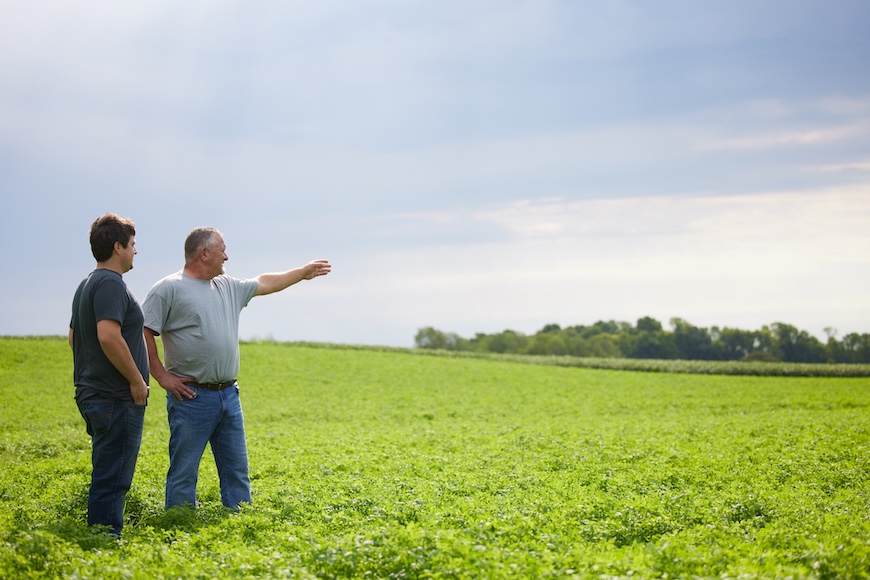
1. Monitor and optimize soil pH levels.
Fall is the best time to correct soil pH levels—especially if you plan to seed a new alfalfa stand next spring or even next fall. The challenge with adjusting soil pH is that lime lacks mobility, making it a time-consuming process. Adequate soil moisture and at least six months are needed for lime to neutralize soil acidity within the entire plow layer. The optimal soil pH level for alfalfa is 6.8 to 7.2, and root development and nitrogen-fixing nodules usually suffer when the pH drops below 6.2. So, if current soil samples reveal your pH levels are low, this fall is the time to apply it.Although liming is by far most effective when worked into the soil well in advance of planting, it can also help balance acidity and improve nutrient availability in established stands. That said, surface-applied lime only corrects the top 1 to 3 inches of soil, so effectiveness is limited. In fact, surface-applied lime has the potential to make soil too alkaline, so cutting standard, incorporated lime rates in half when making a top-dress application is recommended.
2. Apply the right nutrients.
Depending on the geography you’re in, you might be making your third, fourth or even fifth cutting around Labor Day. Whatever the case, this is a good time to apply phosphorous (P) and potassium (K). P takes a while to break down and become available, so applying it now means it will be ready for your crop to access when waking up from winter dormancy in the spring.K has its best availability for about 28 days after application, so applying it around Labor Day gives stands in the northern states about 3 to 4 weeks to take it up before going dormant. Loading K into the crown before winter dormancy acts similar to an antifreeze in that it helps protect the plant against freezing and frost damage and helps promote better plant health over the winter.
Just be sure to base your P and K application rates off current soil samples, as that helps you make the most efficient use of your crop input dollars. When in doubt, consult your local agronomist for fertility tips that are customized for your fields. And note that nutrients like sulfur (S) and boron (B) have a high potential of leaching, so those applications should be made in spring instead of fall.
3. Prevent spring weed pressure.
Fall herbicide applications are one of the most underutilized tools in the alfalfa industry. Broadleaf weeds like thistles, marestail, shepherd’s purse, field pennycress, mustards and dandelions are highly active when they awake from winter dormancy. If they’re left unchecked going into winter, they could grow too large in spring for an herbicide application to effectively control. As a result, your alfalfa stand’s first cutting could be hit with a significant reduction in forage quality as the weeds compete for moisture, fertility and space.So, if you have glyphosate-tolerant stands of Roundup Ready® or HarvXtra® alfalfa in your fields, get out there and apply a product like Cornerstone® 5 Plus herbicide prior to the first frost this fall, so you can catch weeds while they’re still in the rosette stage and susceptible to herbicides. Depending on your geography, the October to November timeframe can be a good time to make this application.
Established conventional alfalfa stands that are at least a year old should be treated with a metribuzin product like Dimetric® Liquid herbicide after the crop goes dormant in the fall, or early in the spring before new growth exceeds 2 inches. Making this application during dormancy not only helps prevent crop injury and yield reduction potential but also provides extended residual weed control.
Regardless of which chemistries you plan to utilize for your fall herbicide application, we always encourage you to ask your CROPLAN® local retail seed expert for help in prescribing the right rates for your tank mix.
Applying a glyphosate product over Roundup Ready® or HarvXtra® alfalfa after spring green-up can potentially still rid the stand of weed pressure before it impacts yield potential and forage quality of the first cutting. However, the weeds must be small, and the application should be made before stands accumulate 4 to 6 inches of regrowth. After that, the damage has been done, and you’re better off waiting until after the first cutting to spray. But keep in mind that weed populations will harden over in response to being cut, making post-cut herbicide applications less effective. Plus, they’ll become even harder to control when conditions turn hot and dry later in the summer. To avoid this scenario next spring, make your herbicide application yet this fall.
4. Time your final cutting properly.
Every fall, producers tend to wrestle over when to take their final cutting of the season. Historically, agronomists have recommended not cutting alfalfa after Labor Day in the north central U.S., because the stand needs to regrow enough before dormancy to help it survive over the winter.In many ways, timing your last alfalfa harvest is similar to making sure you fill the tank in your lawn mower before storing it for the winter.
For optimal results, alfalfa needs about 45 days of regrowth to “fill the tank.” It does this by sprouting leaves, which act like solar panels to absorb the sunlight needed to create the carbohydrates that are transferred into the plant’s root system and stored to fuel next year’s growth. Building this energy store helps defend your stand from winterkill; plus, the added plant material can assist in catching snow, which can help insulate the alfalfa crown and protect it from subzero temperatures.
While the final cutting date happens to coincide with Labor Day in states like the Dakotas, Minnesota, Wisconsin and Michigan, it moves later into fall if you’re located farther south or in the Pacific Northwest, where alfalfa usually goes into dormancy later. But if you take your last cut in mid-September or early October in those north central states, the plants will expend much of their stored carbohydrates to push up new growth right as the growing season is coming to an end. If only 10-20 days pass after cutting before alfalfa goes dormant, the plants won’t have enough time to replenish the tank, and the fuel gauge will remain low all winter. Then your stand will be left vulnerable to freezing winter temperatures, and it won’t have the energy reserve it needs to draw from to grow vigorously next spring.
While many growers still try to time their final harvest 45 days before the average first hard frost date, there is another option. Some growers choose to defer their final cutting until right before or right after a killing frost. This can be a good strategy if you want to store additional forage materials for the winter months. It can also be a saving grace for growers who find themselves delayed by busy schedules or prolonged rainfall around that 45-day pre-killing frost target date.
If you leave the final alfalfa cutting until right before or right after the stand goes dormant, it will experience little to no regrowth until spring. As a result, the plant won’t be triggered to use its stored carbohydrates, keeping the tank full over the winter and ready to fuel strong growth potential in the spring. If you harvest at this time, just be sure to leave 5 to 6 inches of stubble to help protect the alfalfa crown against extreme cold and trap a protective blanket of snow to help insulate the stand over the winter.
If you have questions about how to best manage your alfalfa stands this fall, don’t hesitate to contact your CROPLAN local retail seed expert to learn more. They’re primed and ready to help you optimize your alfalfa crop’s potential.
All photos are either the property of WinField United or used with permission.
© 2026 WinField United. Important: Before use always read and follow label instructions. Crop performance is dependent on several factors many of which are beyond the control of WinField United, including without limitation, soil type, pest pressures, agronomic practices and weather conditions. Growers are encouraged to consider data from multiple locations, over multiple years and to be mindful of how such agronomic conditions could impact results. CROPLAN, Cornerstone and Dimetric are trademarks of WinField United. All other trademarks are the property of their respective owners.
ENOUGH ALREADY, I’M READY FOR RESULTS.
Tired of the same old, same old? Looking for a partner this season and not just another buddy? Find your local CROPLAN retailer, and show those acres who’s boss.
RELATED INSIGHTS
Get More From Your Seed Investment With The Elite Rx® Program
As much as we love seed, we know it’s only one variable in the complex equation it takes to run a profitable operation year in and year out. Our...
READ MORE ❱
The Do's and Don'ts Of Planting Season
If you chose CROPLAN® seed this season, your spring is already off to a great start. But you know what they say: The sins of the planter will haun...
READ MORE ❱
How to Evaluate Seed Performance Before Harvest
Yield data reveals a lot about the payoff of a seed decision, but it doesn’t tell the whole story. Before you fire up the combine, take time to ...
READ MORE ❱