


Manage Diseases in High-Value Hybrids with Effective Fungicide Applications
Darrin Holder
Crop Protection Product Manager
-

- Agronomy
- Manage Diseases in High-Value Hybrids with Effective Fungicide Applications

When all the disease triangle components are in place — the inoculum (disease spores), the host (the plant) and the right environment — disease will likely manifest. If we get hot and dry weather, the opportunity for disease usually decreases. Temperatures in the 80s are great for growing crops but, unfortunately, also for disease pressure. Add extended wetness to the equation and the chances for disease increase. That’s why it’s important to apply a fungicide, particularly to your mid- to high response-to-fungicide (RTF) hybrids. You can curb disease risks with fungicides, even when costs are above average, by managing applications efficiently.
Get the Most Out of Mid- to High RTF Hybrids
Late planting will cause corn plants to grow quickly. Anything you can do to keep them healthy and optimize biomass during the period of grand growth up through grain fill is a plus. RTF scores are a valuable tool to help you with management decisions like these. This data, measured in randomized, replicated research trials through the Answer Plot® system, allows us to determine how a hybrid responds to a fungicide application.Hybrids with high RTF scores respond greatly to a fungicide application, indicating you might prioritize those acres with your available fungicide dollars. Knowing your hybrids’ RTF scores enables you to make decisions now on which acres you’re likely to treat with a fungicide regardless of disease pressure and which acres, in the absence of disease, you probably won’t treat. You can view all CROPLAN® products’ RTF scores
in the 2026 seed guide here.
Choose the Right Fungicide
With fungicides, you get what you pay for, and your agronomist can help you determine which is best for your needs. There are many fungicide modes of action, but the most common for corn fall into three categories as far as effectiveness:1. Base protection: These would be products like Group 3 DMI triazoles that have been in the market for many years. They are predominantly curative with a bit of prevention in them.
2. Additional protection: These are fungicides that contain a triazole and a strobilurin, offering both good protection and good control. Look for Group 11 Qol Strobilurins such as Altipro™ fungicide, RustEase® fungicide, Headline® AMP fungicide and Quilt Xcel® fungicide.
3. Superior protection: These are fungicide products that contain an SDHI component along with a triazole and a strobilurin such as Trivapro® fungicide, Revytek® fungicide or Delaro® Complete fungicide, or products that contain next level triazoles with proven strobilurins such as Veltyma® fungicide.
Time Fungicide Applications Right
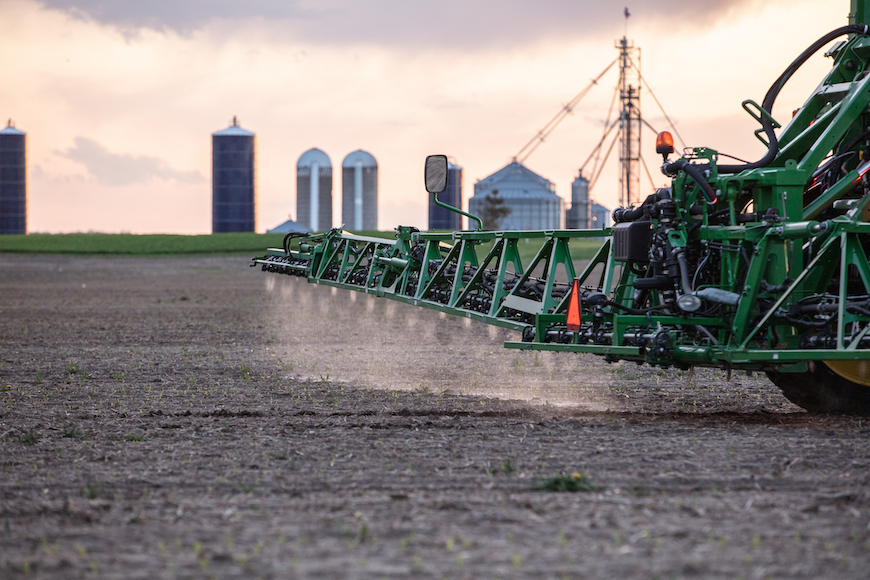
Consider spraying a fungicide on your mid- to high-RTF hybrids even in the absence of disease, because doing so can pay off in all yield environments. The sweet spot for spraying a fungicide on corn is VT to R1. However, if you’re a farmer who is growing high-RTF hybrids and don’t have access to an airplane or a helicopter, you can’t get a ground rig through the field at that growth stage. In this case, I recommend putting your ground rig through with a fungicide when your corn is between V10 – V14.Maximize Impact with Every Application
Get more fungicide to the intended target the first time by adding an adjuvant like MasterLock® adjuvant to the tank mix. MasterLock adjuvant works to deliver fungicides where they need to go by increasing canopy penetration and enhancing spray coverage, whether applied by ground or air. Data from Answer Plot trials showed hybrids sprayed with fungicide and MasterLock adjuvant yielded an average additional 5.7 bu/A, compared to those sprayed with fungicide alone.1 And when applied by drone, the tank mix with MasterLock adjuvant delivered 6.2 times more spray into the canopy.2 With heavy disease pressures and high product costs, losing fungicide due to drift or evaporation is like throwing away your crop protection dollars.For more information on response-to fungicide scores and how to protect your high-value hybrids from disease for 2026, make sure to talk with your CROPLAN local retail seed expert.
1WinField United. 14 studies, eight states, all fungicides. 2012-2017.
2WinField United. Based on one trial, replicated three times, at the Innovation Center in River Falls, WI, in 2021.
All photos are the property of WinField United or used with permission.
© 2025 WinField United. Important: Before use always read and follow label instructions. Crop performance is dependent on several factors many of which are beyond the control of WinField United, including without limitation, soil type, pest pressures, agronomic practices and weather conditions. Growers are encouraged to consider data from multiple locations, over multiple years and to be mindful of how such agronomic conditions could impact results. Answer Plot, CROPLAN, MasterLock, RustEase and WinField are trademarks of WinField United. All other trademarks are the property of their respective owners.
ENOUGH ALREADY, I’M READY FOR RESULTS.
Tired of the same old, same old? Looking for a partner this season and not just another buddy? Find your local CROPLAN retailer, and show those acres who’s boss.
RELATED INSIGHTS
6 Ways to Unlock the Next Level of Production
Season’s end is a great time to reflect on successes and missed opportunities to develop a solid plan for 2025. As you look for ways to unlock t...
READ MORE ❱
5 Tips for Managing Early-Season Plant Stress
Planting is just around the corner. Every decision you make, including your seed purchase and the ground conditions you place it in, can affect the nu...
READ MORE ❱

Why Water Conditioners Should Be in Your Tank Mix
If you’ve chosen CROPLAN® seed, you’ve already off to a good season, but the next step is protecting your investment and ensuring maxi...
READ MORE ❱