


-

- Agronomy
- In-Season Update: Diseases and Insects to Watch For
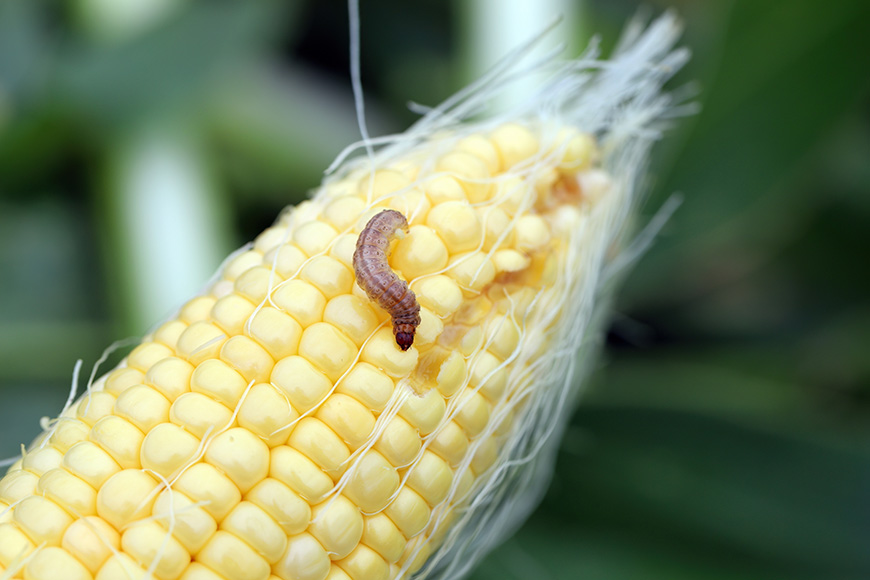
So, what’s coming this season? We tapped four agronomic experts from growing regions across the country to find out what they’re seeing in fields right now.
Featured Experts
Jon Zuk: Central Region (MN)Tim Abbe: Central Region (WI, IL)
Dylan Tyler: Coastal Region (Northern AL, middle TN and middle KY)
Chris Wynn: Pacific Northwest Region
Q: What were the biggest yield-robbing threats in your region in 2025? Do you expect any will return in 2026?
Zuk (MN): "Two pests that have been common are corn rootworm and tar spot. We’re for sure expecting those again this season.
In soybeans, one insect we get most every year is soybean aphids. The pressure we get varies, but we’ll likely get more of those this season.”
Abbe (WI): “Southern rust, for sure. It doesn’t overwinter in the northern part of the U.S., so we’re not sure if it’ll be a big problem this year, but we’ll wait and see.”
For alfalfa growers, it’s alfalfa weevils. They’ve been a consistent problem for the last 4-5 years and are hard to kill.
In Illinois and Wisconsin, we see rootworm every year – partly because we have so many corn-on-corn fields. They’re always there and always an issue.”
Tyler (Coastal): “Bean leaf beetles and stink bugs can be a bigger issue in soybeans than we expect every year.
As far as cotton is concerned, we see plant bugs, thrips and stink bugs most years, including last year, and work hard to control them.
The other big things that impacted yields were weather and fungicide applications. Delayed planting followed by dryness made growers question if and when to spray fungicide.”
Q: What diseases and insects have you seen or do you expect to see in fields this season?
Zuk (MN): “This season we faced dryness going into June, which means we’ll likely have more insect pressure, or the same amount of pressure with greater crop damage. For soybeans, that dryness can cause greater grasshopper pressure or late-season insect feeding.
Alfalfa weevils are also something we’re watching for as the second cutting comes up quick.
For corn, we’re seeing corn rootworm larvae in fields, which may affect tassel timing with beetle silk clipping. That’s another insect we’re scouting for soon.
In terms of diseases, the threats we’re worried about are soybean seedling diseases like pythium, fusarium, phytophthora and rhizoctonia because it was cold in the early season.”
Abbe (WI): “Tar spot is often the disease that dominates our conversations with growers. While we are watching carefully for tar spot, it’s usually most problematic when it’s paired with another disease. For example, in 2025, we had tar spot with southern rust. I would remind growers to scout and manage for other diseases, too. In today’s high yield environments, it doesn’t take a lot of disease pressure to knock off substantial bushels and make a fungicide application pay off.”
Tyler (Coastal): “Because of the mild winters in the south, we never completely get rid of insects. We always see a lot of them, but we plan for it. For soybeans, we’re specifically focusing on getting control of stink bugs.
Thinking about diseases, we see southern rust in some spots almost every year – it’s not an ‘if,’ but a ‘when.’ And gray leaf spot is another big yield robber for corn in our area every year.
Overall, because of the weather conditions, growers planted almost a month earlier than usual. That’s a positive thing for yield potential, but the early timing means we could still see diseases in corn with the moisture and humidity that we have. Protecting against these potential diseases may sanction an earlier fungicide application in corn at R1.”
Wynn (PNW): “Insects have been all over fields in my region. We’re already seeing higher numbers of aphids, white flies, thrips, alfalfa weevils, leaf beetles and other insects, depending on crop and region. We did expect that going into this growing season, having seen the warmest winter here in over 80 years. Thrips also are always a problem since they’re so difficult to kill, and those are always at the front of growers’ minds.
When it comes to diseases, we’ve seen some wheat stem rust in parts of the Pacific Northwest already, which is pretty early for that. We’re waiting to see how damaging the cercospora leaf spot will be for sugar beet fields; the pressure of that disease may be pretty high this year due to the warm winter and wetness in April.”
Q: What are your recommendations for growers in your region this season?
Zuk (MN): “Generally, across the geography, we’ve seen dry early conditions, so growers were able to plant earlier. Because of that timing, any damage from pests we normally have will be enhanced. With that, we saw many growers cut back on fertility due to high input prices. Without the proper nutrients, your crop is overall less healthy, and can be more susceptible to damage from diseases.
For fungicide, my biggest recommendation is Altipro™ fungicide – it has been really awesome. It can fit in with what many growers are already doing with their management for corn. Tar spot infection usually comes around the last week in June during key tasseling points, so I’ve been talking with growers about how to control that with fungicide before tar spot hits.
Like in other regions, we use insecticides like Arctic® 3.2EC insecticide, Dimate 4E insecticide, Tundra® EC, and Grizzly® Too insecticide, to name a few. One product I would mention is Warden® CX II seed treatment. It has thiamethoxan in it to kill damaging insects. I’m expecting to see a lot of visual differences for fields treated with it, especially because of those dry conditions.”
Abbe (WI): “Some people are predicting a dry season. If that turns out to be true, there are several stress mitigation products we’ll be recommending to help the plant withstand those dry conditions. Voyagro® biostimulant fertilizer is one product we’ve had success with in dry conditions. Products like these can be profitable when used in the right scenarios.
Plant growth regulators (PGRs) can help plants handle that stress and help boost general growth. Ascend2® PGR and Ascend ST3™ PGR are products that can help increase germination and uniformity, which is especially helpful for growers who plant early. There’s also a component in those products to help drive root growth. A lot of our yield limitations come from how much nutrients and moisture the crop can extract from the soil, so these products can help with that.”
Tyler (Coastal): “Grizzly Too insecticide and Tundra EC are our go-tos for soybean insecticides.
In terms of controlling diseases, it’s really all about fungicide application timing and actually getting the product to the leaf. In the V5-V10 stages, I recommend growers choose a fungicide that will get them longevity and protect corn for another application later on, when disease pressure is higher.
MasterLock® adjuvant is a great product for foliar diseases like gray leaf spot. Deposition is key to fighting disease – your fungicide needs to actually get into leaves in order to work. We’re also seeing more growers making drone applications than ever before. The smaller droplets from drones mean there’s a bigger need to drive product deeper into the canopy, which is where MasterLock adjuvant can help.
I would add that scouting is one of the best things you can do; I encourage growers to get into the fields to make sure whatever product or management strategy they’re trying is what crops actually need at that time.”
Wynn (PNW): “For this year, insects are coming faster and in much higher numbers, specifically aphids. For tree crops, I like to recommend Grizzly Too insecticide. And our recommendation for vegetables is Delta Gold® insecticide. Since we have a lot of alfalfa in California, depending on what’s registered, we usually recommend Arctic 3.2EC insecticide, Dimate 4E insecticide, Tundra EC or Grizzly Too insecticide to help control insects.
For sugar beets, we really have to focus on getting that cercospora leaf spot under control. Having a product with more than one mode of action helps, like Altipro fungicide.
When it comes to plant disease, fungal pathogens like warm and moist conditions. Whether a grower has fields that are irrigated or not, and if the field was hit with rainstorms or not, those warm and wet areas of the field are where we want to target disease scouting. I’d encourage growers to scout in those areas first, especially after irrigation events or thunderstorms.
When fields are dry, insect populations come out. It’s extra important to scout during hot, dry spells, too. Make sure to look under the leaf and lower in the crop canopy as insects like to hide in those areas.”
Scout for Insects and Diseases in Your Fields
Want to learn more about controlling pests in your fields? Get scouting tips or reach out to your CROPLAN® local retail seed expert to get an even better view of what pests are in your area.
All photos are either the property of WinField United or used with permission.
© 2026 WinField United. Important: Before use always read and follow label instructions. Crop performance is dependent on several factors many of which are beyond the control of WinField United, including without limitation, soil type, pest pressures, agronomic practices and weather conditions. Growers are encouraged to consider data from multiple locations, over multiple years and to be mindful of how such agronomic conditions could impact results. Altipro, Arctic, Ascend, CROPLAN, Delta Gold, Grizzly, MasterLock, ST3, Tundra, Voyagro, Warden and WinField are trademarks of WinField United. All other trademarks are the property of their respective owners.
ENOUGH ALREADY, I’M READY FOR RESULTS.
Tired of the same old, same old? Looking for a partner this season and not just another buddy? Find your local CROPLAN retailer, and show those acres who’s boss.
RELATED INSIGHTS
Top Insects to Scout for in Corn and Soybeans
A healthy, high-performing crop looks like success to us. To insects, however, it looks like a big, tasty meal. Managing pests in corn and soybeans is...
READ MORE ❱