


5 Must-Dos to Help Protect Your Seed Investment in 2026
Isaac Anderson
Market Development Agronomist
-

- Agronomy
- 5 Must-Dos to Help Protect Your Seed Investment in 2026
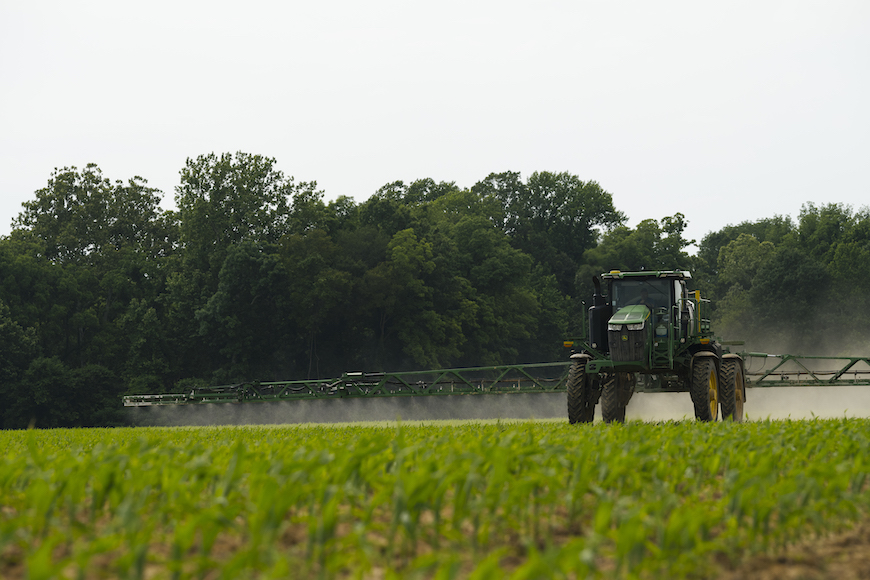
Every grower knows farming is full of risks. So, the question becomes what steps can you take to mitigate risk and increase predictability on your operation? Of course, creating more stable revenue streams and managing assets plays a big role in this goal, but there are also measures you can take to help increase agronomic predictability, starting with planning.
Planning ahead with a proactive management approach is the most impactful way for you to take control of your season. With so many unpredictable factors affecting your yields — weather, disease, input prices — it’s easy for the circumstances to steer your management choices and, ultimately, your season. Wouldn’t you rather be in the driver’s seat? Take control by crafting a plan (and a plan B and C) that addresses these risks and is tailored to your operation’s specific needs.
1. Know Your Seed by Heart
There’s a difference between planting seed and knowing seed. You invest a lot of money into it, but the returns start when you understand why you purchased it. Before planting, you should understand the five Ws:
- What are the characteristics of your seed? What’s its response-to nitrogen? Response-to fungicide?
- Where should it be placed? Can it still perform in variable soils? Does it have strong disease tolerance for susceptible fields?
- When does it yield best? Under what conditions? Does that match your management style?
- Why are you planting it on your acres? What needs or challenges drove your seed decision?
- How can you manage it accordingly? For example, if your seed is highly responsive to fungicide, plan ahead for a fungicide application.
If you don’t dig into the nitty-gritty details of your seed, you won’t know how to manage it properly. And, therefore, you won’t receive the maximum return you can get out of your seed investment. Management isn’t a “one size fits all” thing. Every seed calls for different management; and with just one practice across the farm, you can’t expect the best outcomes for every seed.
Tip: You should always consult your CROPLAN® local retail seed expert for specifics on how your seed should be managed.
2. Weigh the Risks of Disease Pressures
I’m a firm believer in learning from the past. In 2025, we saw widespread disease pressures, everything from typical leaf blight to abnormally high rates of southern rust. These are some of the biggest yield robbers, and the thing to remember is they leave pieces behind. More likely than not, most of these diseases will be back this year, maybe even stronger than before.
The growers in my region in Minnesota who saw the highest ROIs in 2025 were those who had set plans to maximize plant health. That included planning to spray fungicides ahead of time (even before these diseases popped up) and investing in plant health products like biostimulants. Based on what diseases were in your region last season, I’d encourage you to form your management plans accordingly.
However, stay strategic — not every field needs the same heavy fungicide application. Consider which fields are disease-prone and which seeds have the highest response to fungicides to get the most bang for your buck.
3. Take a Proactive Approach to Weed Control
The other greatest competition, besides disease, to a healthy crop and maximum yields is weeds. Even when you’re getting all the foundational components right, such as seed and fertility, weeds are a constant challenge in achieving positive ROI. Too often, I see a reactive approach to weed control (“My corn or soybeans are ready to be sprayed.”) rather than a proactive one (“I plan on preventing weeds from the start through x, y and z.”).
Often, growers think about weed control on a baseline level, like what herbicide they’re going to spray. The secret to greater control is unlocked when you start to look deeper. That means getting into the specifics of that herbicide: What are the active ingredients and how many are in the tank? What additives are needed to activate those active ingredients? What group of herbicide is it and will there be any antagonism? What’s the application rate?
The growers who address all of these questions will no doubt have greater weed management than those who don’t. If you’re not going three, four or five levels deeper than you ever have on weed management, you can expect an ongoing battle. Granted, that’s a lot of questions, but that’s where your local agronomists are there to help. They know the ins and outs of the products you’re using, plus the ins and outs of your operation, and are a great resource to lean on.
4. Realize Small Investments Have the Potential to Pay Dividends
Adjuvants may be one of the most overlooked yet effective products to increase yield and ROI potential. Many growers might include an adjuvant, but it’s a decision based on fulfilling the requirements on the herbicide label rather than a strategic one to boost yield.
I encourage you to look at costs and revenues holistically. Totaling all the essentials to grow your crop, you’re making a large investment per acre, probably close to $1,200-$1,500 an acre. Including an adjuvant or other plant health product, even a premium one, will run you only around $20-$50 per acre. That’s a relatively small investment for a product that could make major payoffs in yield and ROI potential.
This season, we saw a great representation of the benefits of adjuvants in the field in Central Minnesota. An agronomist from our team was scouting fields in late July and noticed tar spot lesions. The grower’s corn had already contracted the disease, but a fungicide application with MasterLock® adjuvant was made soon after to stop the spread of infection to the rest of the crop, resulting in positive yields.
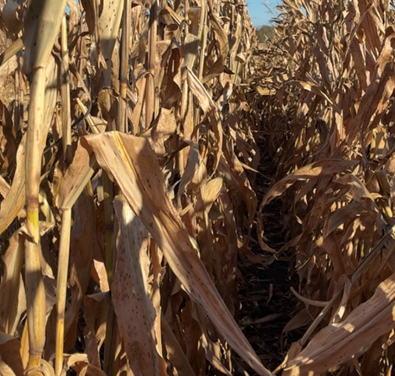

Wright County, MN. Tar spot after a July 29, 2025, application of Delaro® Complete fungicide + MasterLock® adjuvant.
5. Rely on an Agronomic Partner to Help Protect Your Assets
At the end of the day, your primary job is to run your business, with less time to focus on how to mitigate agronomic risk. That’s where agronomists come in — because it is our job to focus on agronomics. The best thing you can do for your business (and your crops) is lean on your local agronomist to tackle these complicated crop management pieces. With your operational knowledge and your agronomist’s technical expertise, you can make decisions that help reach your shared goal of greater ROI potential.
Next Steps
Inspired to take action? Find a CROPLAN local retail seed expert near you to help develop a strong crop management plan for 2026. They’re there to answer any questions you may have, big or small. All photos are either the property of WinField United or used with permission.
© 2026 WinField United. Important: Before use always read and follow label instructions. Crop performance is dependent on several factors many of which are beyond the control of WinField United, including without limitation, soil type, pest pressures, agronomic practices and weather conditions. Growers are encouraged to consider data from multiple locations, over multiple years and to be mindful of how such agronomic conditions could impact results. CROPLAN, MasterLock and WinField are trademarks of WinField United. All other trademarks are the property of their respective owners.
ENOUGH ALREADY, I’M READY FOR RESULTS.
Tired of the same old, same old? Looking for a partner this season and not just another buddy? Find your local CROPLAN retailer, and show those acres who’s boss.
RELATED INSIGHTS
6 Ways to Unlock the Next Level of Production
Season’s end is a great time to reflect on successes and missed opportunities to develop a solid plan for 2025. As you look for ways to unlock t...
READ MORE ❱
Crop Check-In: Conditions, Performance and Recommendations
As we move into August, growers across the country are watching their fields closely — and so are the agronomists who work alongside them every ...
READ MORE ❱
.jpg?width=870&height=580&ext=.jpg)
How Late-Season Soybean Treatments Can Impact Yield Potential
Mid-July is a critical point in the season. Soybean plants are in the reproductive stages, and your yield potential is not yet locked. My conversation...
READ MORE ❱